What Is AI Search Visibility?
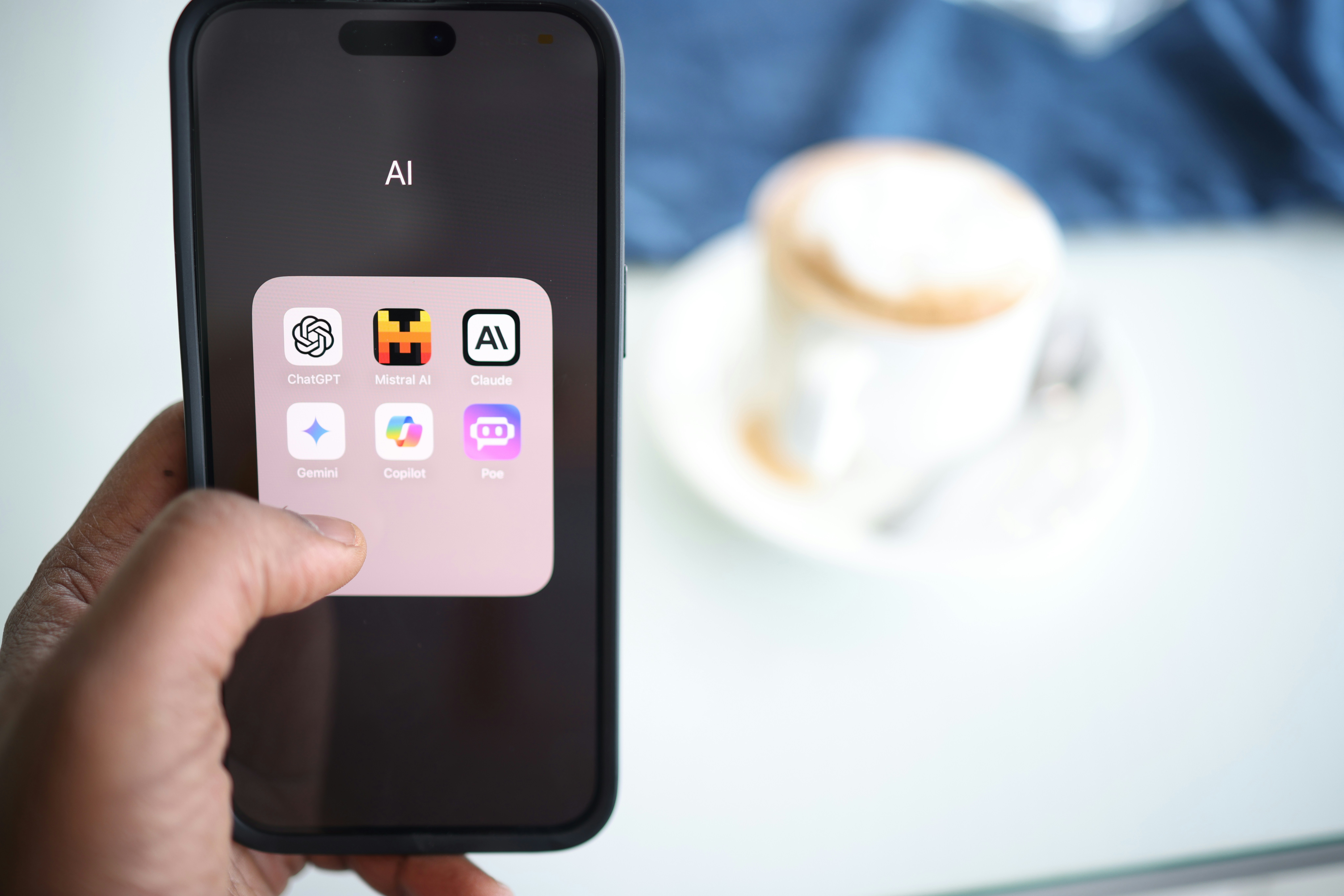
AI search visibility is the likelihood that your brand, content, or expertise appears in a synthesized answer generated by an AI-powered search engine — including ChatGPT, Google AI Overviews, Perplexity, Microsoft Copilot, and Claude — when a user asks a relevant question. Unlike traditional search engine optimization, which focuses on ranking in a list of links, AI search visibility is about being the source an AI engine selects, cites, and recommends when constructing its answer.
At GrokXSeo, we define AI search visibility as a brand's share of voice inside AI-generated responses — the percentage of relevant queries on which a major AI platform names, cites, or recommends your brand as an authoritative source. This is the new frontier of organic discovery, and it is growing faster than any search channel before it.
Why AI Search Visibility Now Outranks Traditional SEO for Many Queries?
The shift is already measurable and accelerating. According to research tracking AI citation patterns in 2026, the overlap between pages that rank highly in Google's traditional ten-link results and pages that get cited by AI engines has dropped from 70% to below 20% (Brandlight, 2026). This means that optimizing for Google alone leaves a brand invisible in the most rapidly growing discovery channel.
ChatGPT reached over 800 million weekly active users by late 2025. Google AI Overviews now appear in at least 16% of all search queries — significantly higher for comparison, recommendation, and high-intent commercial queries. Perplexity processed 780 million queries in a single month in 2025. These are not fringe tools. They are the primary research channel for a growing proportion of buyers, executives, and decision-makers.
"When a buyer asks ChatGPT which SEO agency they should hire, your brand is either in the answer or it is not. Traditional rankings do not determine that outcome — AI visibility strategy does."
How AI Engines Select the Sources They Cite
Understanding how AI engines choose which sources to include in a synthesized answer is the foundation of an effective AI visibility strategy. The process differs fundamentally from how Google's crawler ranks pages.
Query Fan-Out
When a user asks an AI engine a question, the engine does not process the query as a single search. It breaks the question into multiple sub-queries and retrieves information for each separately before synthesizing a combined answer. A question like "which SEO agency should I hire for editorial link building?" might generate sub-queries around "best editorial link building agencies," "what is editorial link building," and "how to evaluate an SEO agency." A brand that has authoritative content covering each of these sub-topics has a higher probability of being included in the synthesized answer.
E-E-A-T Signals for AI Citation
AI engines priorities sources that demonstrate Experience, Expertise, Authoritativeness, and Trustworthiness — the same framework Google uses for quality evaluation, but applied through a different lens. For AI citation, this means: content written by identified experts with verifiable credentials, statistics and claims backed by cited sources, consistent brand mentions across multiple independent third-party domains, and content structure that AI can extract and paraphrase clearly.
Recency Weighting
AI citation systems apply significant recency bias. Research from Amusive (2025) found that 50% of content cited in AI search responses is less than 13 weeks old. Pages that are not updated at least quarterly lose citation probability substantially — a dynamic that makes content freshness a primary ranking signal in AI search, not a secondary consideration.
The Five Pillars of AI Search Visibility Strategy
Pillar 1: Answer-First Content Structure
AI engines extract answers most effectively from content that leads with a direct, precise answer before expanding into supporting context. This is called a definition-lead structure. Supporting paragraphs provide depth. This mirrors the format AI uses to construct its own responses and makes extraction significantly more reliable.
Pillar 2: FAQ Architecture Built for AI Extraction
FAQ sections are among the most cited content formats in AI-generated responses. When structured correctly. Every piece of content targeting AI visibility should include a minimum of five FAQ entries built in this format, combined with FAQ Page schema markup in the page.
Pillar 3: Statistical Richness and Source Citation
The Princeton University GEO research (Aggarwal et al., 2024, arXiv:2311.09735) identified that adding citations and statistics to content can improve AI citation frequency by up to 40%.
Pillar 4: Entity Consistency Across the Web
AI engines build their understanding of a brand's expertise from signals across the entire web, not just from the brand's own website. A brand mentioned positively and consistently across 20 independent domains is treated differently from a brand with a polished website and minimal external presence.
Pillar 5: Structured Data and Technical AI Accessibility
Before any content strategy consideration, AI crawlers must be able to access and render your pages. This means: AI bots must not be blocked in robots.txt.
GrokXSeo's AI Visibility Framework for SEO Clients
GrokXSeo has built its content production methodology around AI citation optimization since early 2025.
For clients in competitive search categories, this methodology consistently produces both traditional Google rankings and measurable AI citation improvements — because the signals that drive AI citation (depth, authority, structure, freshness) are the same signals that Google's quality systems reward. AI visibility strategy and traditional SEO are not in competition. When implemented correctly, they are the same strategy.
How to Measure AI Search Visibility?
AI visibility measurement is less mature than traditional SEO analytics but is developing rapidly. The primary measurement approaches in 2026 are:
• Share of Model tracking — manually querying AI platforms with your target keywords and recording citation frequency. Tools like Semrush's Enterprise AIO and Brand Mentions are beginning to automate this.
• Branded search volume growth — a consistent increase in branded search queries in Google Search Console is a strong indicator that AI citations are driving brand awareness among users who then search directly.
• Referral traffic from AI platforms — Perplexity and some other AI engines send measurable referral traffic, which appears in analytics as direct or referral traffic from perplexity.ai or chat.openai.com.
• Dark social and direct traffic growth — users who encounter your brand in an AI response often visit directly rather than clicking through, creating dark social attribution that shows up as unexplained direct traffic growth.
Frequently Asked Questions: AI Search Visibility
What is AI search visibility?
AI search visibility is the probability that your brand or content appears as a cited source in an AI-generated response from platforms including ChatGPT, Perplexity, Google AI Overviews, Claude, and Microsoft Copilot. It is determined by content authority, structure, freshness, and entity consistency across the web — not by traditional keyword ranking positions alone.
How is AI search visibility different from traditional SEO?
Traditional SEO focuses on ranking in a list of ten links in a search engine results page. AI search visibility focuses on being selected as a source in a synthesized conversational answer. The ranking signals overlap significantly — depth, authority, and structure matter in both — but AI systems weight citation richness, answer-first formatting, and cross-web entity consistency more heavily than traditional crawlers do.
Which AI engines should I optimize for?
The primary AI search platforms to optimize for in 2026 are: Google AI Overviews (appearing in up to 60% of searches for high-intent queries), ChatGPT with browsing enabled (800+ million weekly users), Perplexity (780 million monthly queries), Microsoft Copilot, and Claude. Optimizing for one effectively tends to improve visibility across all of them, because the underlying content quality signals are shared.
How long does it take to see AI search visibility results?
Brands that implement structured GEO practices — definition-lead content, FAQ schema, statistical citations, and entity consistency — typically see measurable citation frequency improvements within 60 to 90 days.
Does GrokXSeo offer AI search visibility services?
Yes. GrokXSeo's SEO strategy and content architecture services are fully integrated with AI visibility optimization — including GEO-structured content briefs, FAQ Page schema implementation, entity consistency audits, and quarterly content freshness protocols. Contact us at grokxseo.online contact for a free AI visibility audit.
What is GEO — Generative Engine Optimization?
Generative Engine Optimization (GEO) is the practice of structuring content, schema markup, and brand signals so that AI-powered search engines can reliably discover, extract, and cite your brand in their generated answers. The term was formalized by researchers at Princeton University (Aggarwal et al., 2024) and has become the primary framework for AI search visibility strategy. GrokXSeo applies GEO methodology across all content and technical SEO engagements.
GrokXSeo is a full-service SEO and digital marketing agency serving founders, SaaS brands, and purpose-led organizations. We build AI search visibility alongside traditional organic rankings — because in 2026, both matter. Start at grokxseo.online.